 090003 25483
 Yashoda Hospitals Hitec City Hyderabad, Kothaguda, Telangana 500084
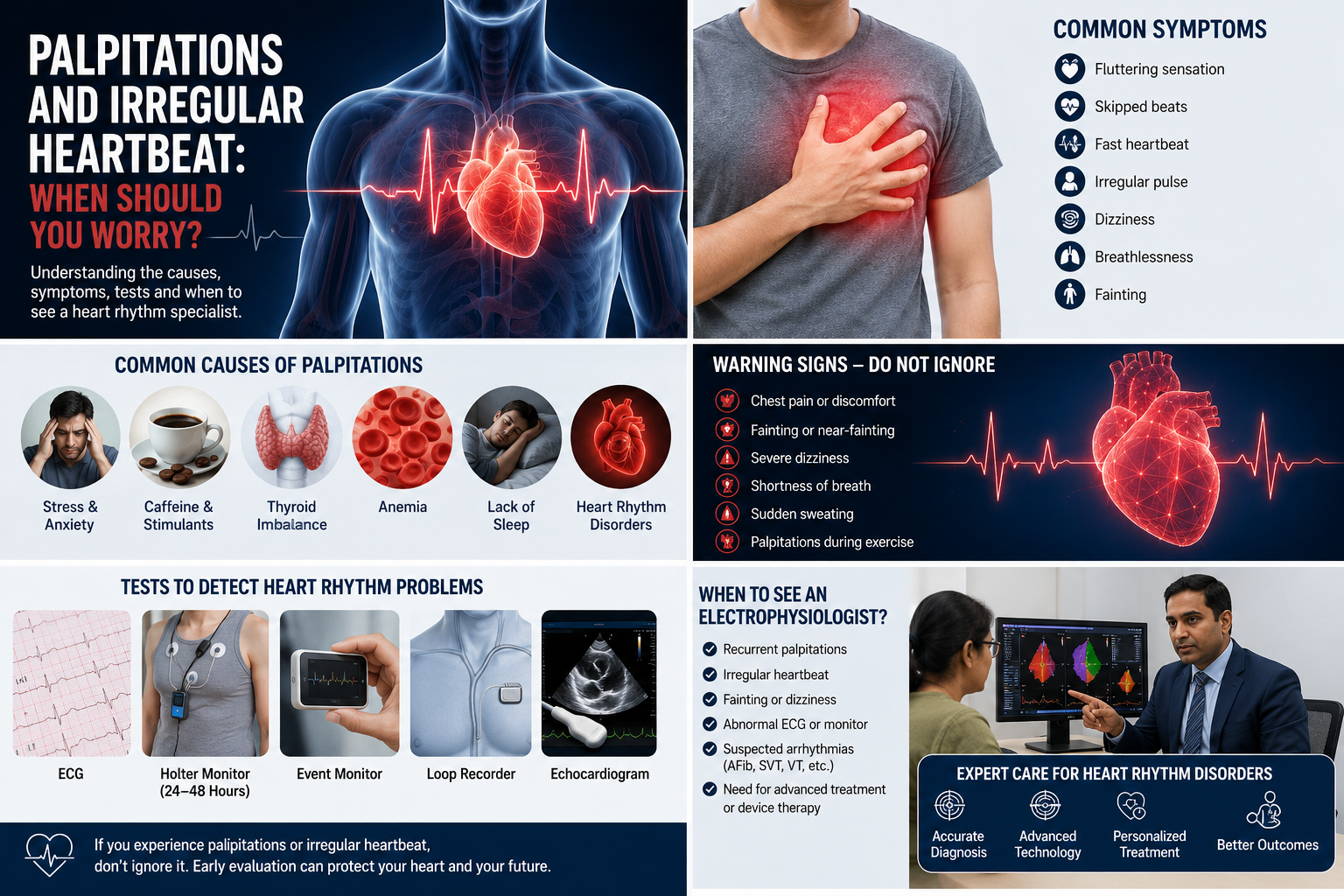
Most of us do not notice our heartbeat during normal daily life. But when the heart suddenly feels like it is racing, fluttering, skipping a beat, pounding in the chest, or beating irregularly, it can be frightening.
This sensation is commonly called palpitations.
For some people, palpitations may be temporary and harmless. They may happen after too much coffee, lack of sleep, stress, anxiety, dehydration, or intense exercise. But in some cases, palpitations may be the first sign of an underlying heart rhythm disorder, also known as an arrhythmia.
The challenge is that patients often do not know when to ignore it, when to observe it, and when to consult a specialist.
That is why understanding palpitations is important — because an irregular heartbeat is not just about how fast the heart beats. It is about whether the heart’s electrical system is working normally.
What Are Palpitations?
Palpitations are the feeling that your heartbeat is unusual or more noticeable than normal.
Patients describe palpitations in different ways:
- “My heart is racing.”
- “I feel fluttering in my chest.”
- “My heartbeat suddenly becomes very fast.”
- “It feels like my heart skips a beat.”
- “I feel a thud or extra beat.”
- “My pulse feels irregular.”
- “The heartbeat comes suddenly and stops suddenly.”
Palpitations may be felt in the chest, throat, or neck. They may last for a few seconds, a few minutes, or sometimes longer.
The important question is not only “Are you feeling palpitations?”
The more important question is: “Why are they happening?”
Why the Heart Rhythm Matters
The heart has its own electrical system. This electrical system controls when the heart beats, how fast it beats, and whether the rhythm is regular.
A normal heartbeat usually begins from the heart’s natural pacemaker, called the sinus node. From there, electrical signals travel through the heart in a coordinated manner, allowing the heart chambers to pump blood effectively.
When this electrical activity becomes disturbed, the heart may beat:
- Too fast
- Too slow
- Irregularly
- With extra beats
- In sudden episodes
This is where a heart rhythm specialist or an electrophysiology-focused cardiologist becomes important. The goal is not just to treat the symptom, but to identify the exact rhythm problem behind it.
Common Symptoms That May Come With Palpitations
Palpitations may happen alone, or they may be associated with other symptoms.
Common associated symptoms include:
- Fluttering in the chest
- Skipped beats
- Fast heartbeat
- Irregular pulse
- Pounding heartbeat
- Chest discomfort
- Dizziness
- Breathlessness
- Fatigue
- Sweating
- Anxiety-like feeling
- Sudden weakness
- Near-fainting sensation
Sometimes patients mistake rhythm problems for anxiety. In other cases, anxiety itself can trigger palpitations. This overlap is one reason why proper evaluation is important.
Not every palpitation is dangerous, but palpitations with warning symptoms should never be ignored.
Common Causes of Palpitations
Palpitations can occur due to many reasons. Some are lifestyle-related, some are medical, and some are due to actual heart rhythm disorders.
1. Stress and Anxiety
Stress, emotional tension, panic attacks, and anxiety can increase adrenaline levels in the body. This can make the heart beat faster or feel more forceful.
However, it is important not to label every palpitation as “stress” without evaluation, especially if symptoms are frequent, sudden, or associated with dizziness, fainting, chest pain, or breathlessness.
2. Caffeine and Stimulants
Excessive tea, coffee, energy drinks, nicotine, and some stimulant medications can trigger palpitations in certain individuals.
Some people are more sensitive to caffeine than others. Even a normal amount of coffee may cause symptoms in sensitive patients.
3. Lack of Sleep
Poor sleep, irregular sleep patterns, and sleep deprivation can disturb the body’s autonomic balance and trigger palpitations.
In some patients, sleep apnea may also be linked with rhythm problems, especially atrial fibrillation.
4. Thyroid Imbalance
An overactive thyroid can make the heart beat faster and may trigger irregular rhythms. In patients with unexplained palpitations, thyroid testing is often important.
5. Anemia or Low Hemoglobin
When hemoglobin is low, the heart may need to work harder to supply oxygen to the body. This can cause fast heartbeat, fatigue, breathlessness, and palpitations.
6. Dehydration and Electrolyte Imbalance
Low fluid intake, vomiting, diarrhea, excessive sweating, or electrolyte imbalance can trigger abnormal heart sensations.
Electrolytes like potassium, magnesium, and calcium play a role in normal electrical activity of the heart.
7. Fever or Infection
During fever, the heart rate naturally increases. Some patients become more aware of their heartbeat during illness.
8. Hormonal Changes
Palpitations may occur during pregnancy, menopause, or hormonal fluctuations. While many are harmless, persistent or severe symptoms should be checked.
9. Heart Rhythm Disorders
This is one of the most important causes to rule out.
Palpitations may be due to arrhythmias such as:
- Atrial fibrillation
- Supraventricular tachycardia
- Atrial flutter
- Premature atrial contractions
- Premature ventricular contractions
- Ventricular tachycardia
- Bradycardia or heart block
Some rhythm disorders are mild, while others can increase the risk of stroke, fainting, heart failure, or sudden cardiac complications.
Types of Rhythm Problems That Can Cause Palpitations
Atrial Fibrillation
Atrial fibrillation, or AFib, is one of the most common irregular heart rhythms. The heartbeat becomes irregular and may be fast. Some patients feel fluttering, racing heartbeat, tiredness, or breathlessness.
AFib is important because it can increase the risk of stroke in certain patients. Many people with AFib may not feel strong symptoms, which makes diagnosis important.
Supraventricular Tachycardia
Supraventricular tachycardia, or SVT, often causes sudden episodes of very fast heartbeat. It may start suddenly and stop suddenly.
Patients may feel intense palpitations, chest pounding, dizziness, or anxiety-like symptoms. SVT is commonly evaluated and treated by heart rhythm specialists.
Premature Beats
Premature beats are extra beats that may feel like a skipped beat, pause, or thud in the chest.
They may come from the upper chambers of the heart or the lower chambers. Many premature beats are harmless, but frequent premature beats may require further evaluation.
Bradycardia and Heart Block
Sometimes the issue is not a fast heartbeat but a slow heartbeat. If the heart’s electrical signals are delayed or blocked, patients may experience dizziness, fatigue, fainting, or weakness.
In selected cases, pacemaker therapy may be required.
Ventricular Tachycardia
Ventricular tachycardia is a rhythm problem arising from the lower chambers of the heart. It can be serious, especially in patients with previous heart attack, weak heart function, or structural heart disease.
Symptoms may include palpitations, dizziness, fainting, chest pain, or collapse. This requires urgent specialist evaluation.
When Are Palpitations Usually Less Concerning?
Palpitations may be less concerning when they are:
- Very occasional
- Brief
- Clearly linked to caffeine, poor sleep, stress, or exercise
- Not associated with chest pain, fainting, dizziness, or breathlessness
- Not increasing in frequency
- Not occurring in a person with known heart disease
However, even mild palpitations should be evaluated if they are new, recurrent, worsening, or causing anxiety.
A simple ECG or rhythm monitoring test can often provide clarity.
Warning Signs: When Should You Worry?
You should seek medical attention if palpitations are associated with:
- Fainting or near-fainting
- Chest pain or chest pressure
- Shortness of breath
- Severe dizziness
- Sudden sweating
- Unexplained weakness
- Palpitations lasting for a long time
- Very fast heartbeat at rest
- Irregular pulse that keeps recurring
- History of heart attack
- Known heart failure
- Family history of sudden cardiac death
- Palpitations during exercise
- Palpitations in elderly patients
- Palpitations with stroke-like symptoms
These symptoms may suggest that the rhythm problem is affecting blood flow or may be linked to a more serious cardiac condition.
Do not wait for symptoms to become severe. Early evaluation can prevent complications.
Why an ECG Alone May Not Be Enough
Many patients visit a clinic after the palpitations have already stopped. By the time an ECG is taken, the rhythm may look normal.
This does not mean the symptoms were imaginary. It may simply mean the abnormal rhythm was not captured at that moment.
That is why rhythm monitoring is important.
The key is to record the heart rhythm during the symptom episode.
Tests Used to Diagnose Palpitations and Irregular Heartbeat
1. ECG
An ECG is the first basic test. It records the electrical activity of the heart at that moment.
It can detect:
- Fast rhythms
- Slow rhythms
- Irregular rhythms
- Previous heart attack changes
- Conduction abnormalities
- Some signs of structural heart disease
But if symptoms are intermittent, the ECG may be normal.
2. Holter Monitor
A Holter monitor records the heart rhythm continuously, usually for 24 to 48 hours or sometimes longer.
It is useful when symptoms happen daily or frequently.
A Holter can detect:
- Extra beats
- Pauses
- Fast rhythms
- Slow rhythms
- AFib episodes
- Rhythm changes during sleep or activity
3. Event Monitor
An event monitor may be used when symptoms are less frequent. It allows longer monitoring and can capture rhythm changes when symptoms occur.
4. Loop Recorder
A loop recorder is useful when symptoms are rare but concerning, especially unexplained fainting or suspected intermittent arrhythmia.
It can monitor heart rhythm for a much longer duration and help identify rhythm problems that may not appear during routine tests.
5. Echocardiogram
An echocardiogram is an ultrasound of the heart. It checks the heart’s pumping function, valves, chamber size, and structural abnormalities.
This is important because rhythm problems may behave differently in a structurally normal heart compared with a weak or diseased heart.
6. Blood Tests
Blood tests may be advised to check:
- Thyroid function
- Hemoglobin level
- Electrolytes
- Kidney function
- Sugar levels
- Other relevant markers
7. Exercise Stress Test
If palpitations happen during physical activity, an exercise test may help evaluate rhythm behavior during exertion.
8. Electrophysiology Study
In selected patients, an electrophysiology study may be recommended. This is a specialized test that studies the electrical pathways of the heart from inside.
It can help diagnose certain rhythm disorders and may be combined with treatment such as catheter ablation.
When Should You See a Heart Rhythm Specialist?
You should consider consulting a heart rhythm specialist or electrophysiology-focused cardiologist if:
- Palpitations are recurrent
- The heartbeat feels irregular
- Episodes start and stop suddenly
- You have fainting or near-fainting
- You have dizziness with palpitations
- Palpitations occur during exercise
- You have known heart disease
- You have a family history of sudden cardiac death
- ECG or Holter shows abnormal rhythm
- You have suspected AFib, SVT, heart block, or ventricular arrhythmia
- You may need advanced rhythm treatment, pacemaker, leadless pacemaker, or device-based therapy
A heart rhythm specialist focuses on identifying the exact electrical problem and selecting the right treatment strategy.
Treatment Depends on the Cause
Treatment for palpitations is not the same for everyone. It depends on the underlying cause, rhythm type, symptom severity, and overall heart condition.
Treatment may include:
- Lifestyle changes
- Reducing caffeine or stimulants
- Improving sleep
- Managing stress
- Treating thyroid problems
- Correcting anemia or electrolyte imbalance
- Medications to control rhythm or heart rate
- Blood thinners in selected AFib patients to reduce stroke risk
- Catheter ablation for selected rhythm disorders
- Pacemaker for slow heart rhythm or heart block
- Leadless pacemaker in suitable patients
- Implantable cardiac devices in selected high-risk cases
The most important step is accurate diagnosis. Without knowing the rhythm, treatment may be incomplete.
Why Early Diagnosis Matters
Ignoring repeated palpitations can delay diagnosis of important rhythm problems.
Some arrhythmias may increase the risk of:
- Stroke
- Fainting
- Falls and injury
- Heart failure worsening
- Reduced exercise capacity
- Emergency hospitalization
- Sudden cardiac events in high-risk patients
Early evaluation allows timely treatment and better long-term outcomes.
In rhythm disorders, the pattern matters. How often it happens, how long it lasts, what triggers it, and what symptoms come along with it all help guide diagnosis.
How Patients Can Track Palpitations Before Visiting the Doctor
Before consulting a specialist, it is helpful to note:
- When the palpitations started
- How often they happen
- How long each episode lasts
- Whether the heartbeat feels fast, irregular, or skipped
- Any trigger such as caffeine, stress, sleep loss, or exercise
- Associated symptoms such as dizziness, chest pain, or breathlessness
- Current medications
- Thyroid history
- Diabetes, blood pressure, or heart disease history
- Family history of sudden cardiac death or rhythm disorders
If you use a smartwatch or pulse device, do not rely only on the device result. Bring the recording or screenshot to your doctor for interpretation.
Palpitations Are Common — But They Should Be Understood
Many people live with palpitations for months or years, assuming they are due to stress or acidity. Others become extremely anxious even when the rhythm is harmless.
Both situations need clarity.
A proper evaluation can answer three important questions:
- Is this a harmless sensation or a true rhythm disorder?
- Is the rhythm problem dangerous?
- What is the right treatment or follow-up plan?
This is where specialist cardiac rhythm evaluation becomes valuable.
About Dr. Rajasekhar Varada
Dr. Rajasekhar Varada is a Senior Interventional Cardiologist in Hyderabad with expertise in advanced cardiac care, image-guided PCI, rotablation, laser coronary angioplasty, TAVR, and device implantation including leadless pacemaker therapy.
For patients experiencing palpitations, skipped beats, irregular heartbeat, unexplained dizziness, fainting, or suspected rhythm disorders, timely cardiac evaluation can help identify the cause and guide the right treatment.
Conclusion: Do Not Ignore an Irregular Heartbeat
Palpitations are common, but they should not be casually ignored — especially when they are recurrent, sudden, associated with warning symptoms, or occur in patients with existing heart disease.
A racing, fluttering, or irregular heartbeat may be harmless in some people, but in others, it may be a sign of a heart rhythm disorder that needs specialist care.
If your heartbeat feels unusual, do not wait for a major episode. Get evaluated, record the rhythm, and understand the cause.
Because when it comes to heart rhythm problems, the right diagnosis at the right time can make all the difference.
FAQs
1. Are palpitations always dangerous?
No. Many palpitations are harmless and may be related to stress, caffeine, poor sleep, or anxiety. However, recurrent palpitations or palpitations with dizziness, fainting, chest pain, or breathlessness need medical evaluation.
2. What does an irregular heartbeat feel like?
It may feel like fluttering, skipped beats, pounding, racing heartbeat, or an uneven pulse. Some people feel it in the chest, throat, or neck.
3. Can anxiety cause palpitations?
Yes. Anxiety and panic can trigger palpitations. But rhythm disorders can also feel like anxiety. That is why proper cardiac evaluation is important if symptoms are frequent or intense.
4. What test is best for palpitations?
An ECG is usually the first test. If the ECG is normal but symptoms continue, a Holter monitor, event monitor, or loop recorder may be needed to capture the rhythm during symptoms.
5. When should I worry about palpitations?
You should worry if palpitations are associated with fainting, chest pain, breathlessness, dizziness, sudden sweating, or if they happen during exercise or in a patient with known heart disease.
6. Can palpitations be due to thyroid problems?
Yes. Too much or too little thyroid hormone can affect heart rhythm and heart rate. Thyroid testing may be advised in patients with unexplained palpitations.
7. What is a Holter monitor?
A Holter monitor is a portable device that continuously records heart rhythm during daily activities. It helps detect rhythm problems that may not appear on a routine ECG.
8. What is a loop recorder?
A loop recorder is a longer-term rhythm monitoring device used when symptoms are rare but concerning, such as unexplained fainting or suspected intermittent arrhythmia.
9. When should I see a heart rhythm specialist?
You should see a heart rhythm specialist if palpitations are recurrent, sudden, associated with fainting or dizziness, or if tests show AFib, SVT, heart block, or other arrhythmias.
10. Can irregular heartbeat be treated?
Yes. Treatment depends on the cause. Options may include lifestyle changes, medicines, catheter ablation, pacemaker therapy, leadless pacemaker, or other device-based treatments in selected patients.